







Search Results for: staffing adjustments

Anomalies Emerge After Luckin Coffee's Scheduling System Upgrade: Peak Forecasting and Staffing Draw Attention
Luckin Coffee recently piloted a new scheduling system in cities such as Guangzhou, Shenzhen, and Chengdu. The system can predict peak hours based on store sales data and arrange minimal staffing accordingly. While the new system improves efficiency, it has also sparked discussions about the distribution of work between full-time and part-time employees, responses to unexpected situations, and labor cost control. At the same time, as Luckin's store expansion slows and sales decline, the problem of redundant staff is gradually emerging, and this system upgrade is seen as an important measure to reduce costs and increase efficiency. As coffee lovers, it is worth learning about the impact of this change on store operations and employee experience. [more…]
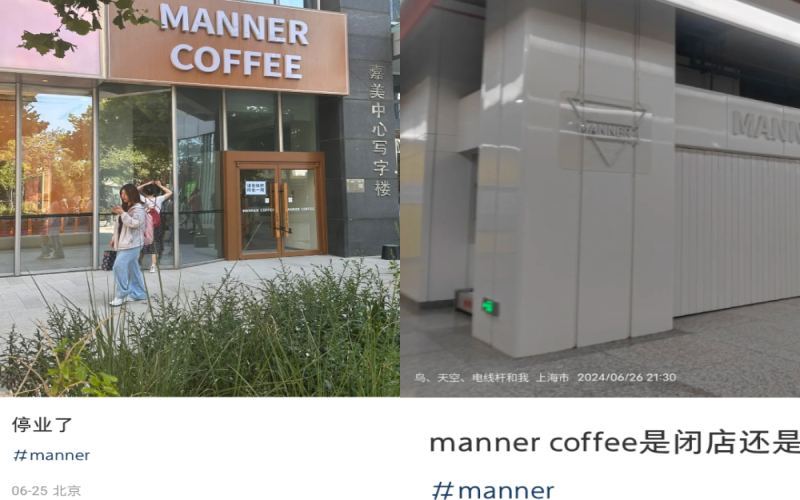
Manner stores see sudden wave of temporary closures: internal staffing adjustments and shortened business hours draw attention
Recently, many consumers have noticed that Manner coffee shops near them have suddenly closed their doors, showing "resting" on the mini-program, with no clear notice and no timetable for resuming business. It is understood that this phenomenon is closely related to Manner's internal personnel adjustments: baristas with excessive working hours are arranged to take leave, while those with insufficient hours are transferred to other stores for support, resulting in some stores having to temporarily close. At the same time, the brand has also shortened the operating hours of some stores, with morning shifts starting later and evening shifts ending earlier. Whether this adjustment can allow Manner to find a balance between chain expansion, specialty quality, and affordable positioning has become a focal point of industry attention. [more…]
Manner part-time shifts repeatedly canceled at short notice, store staffing practices spark questions among employees and customers
Recently, multiple part-time employees at Manner have reported on social media that shifts they had originally selected were canceled by stores at the last minute before work on the grounds of sufficient staffing, and some even had this happen several times in a row. At the same time, some full-time employees have also revealed that stores adjust shifts at will according to how busy they are, arranging long continuous shifts when busy and cutting hours when quiet. Some analysts believe that because part-time hourly wages are higher than full-time ones but the work is more oriented toward packing and cleaning, stores may be more inclined to reduce part-time positions in order to control labor costs. As of now, Manner has not yet responded officially, and this series of scheduling chaos is chilling many young people who are interested in joining. [more…]

Luckin's New Staffing Reduction Rules Spark Heated Debate: Shift Limits, Solo Store Openings and Closings Leave Employees Saying They Can't Keep Up
The February that just passed put many office workers through a chaotic whirlwind—rushing to finish work before the Spring Festival, relaxing fully during the holiday, and then facing the return-to-work wave, pulled back and forth by piled-up tasks and post-holiday burnout. However, for frontline employees at Luckin Coffee stores, March brings not a breather but an even harsher round of adjustments. Controlling effective working hours, implementing a single person to open early and close the store, freezing full-time hiring and restricting promotion channels—a series of measures to cut labor costs have led employees to mock themselves as not even "Luckin slaves," but more like tireless "Luckin robots." At the same time, after the 9.9 promotion shrank, store sales clearly declined, and March happens to be the off-season, putting both sales and profits under pressure. With revenue growth blocked, the company can only push on the cost-cutting side. Employees are full of complaints, the user experience is being tested, and whether brand influence will be weakened as a result has become a focus of outside attention. [more…]

A coffee shop staffed by the hearing-impaired posted a plea for help during the pandemic. After reopening, with zero foot traffic, how did they save themselves through original drip coffee bags?
A silent coffee shop in Shanghai, staffed mainly by hearing-impaired baristas, published an article titled "Please rest assured, we are still alive. But..." on June 14, quickly gaining over 80,000 views. Under the impact of the pandemic, dine-in service was suspended, delivery communication was hindered, and masks obscured lip-reading, plunging the shop into a situation of zero revenue and zero foot traffic. The baristas hand-drew 12 touching moments from those months into illustrations and launched an original themed drip-bag coffee set as a self-rescue effort. The article reviewed the real difficulties this special coffee shop faced, its self-rescue methods, and business adjustment ideas that coffee shops could draw on during the pandemic, including joining delivery platforms, ensuring product quality, designing offline discounts to bring customers back, and developing peripheral products such as drip bags and coffee beans to meet consumers' shifting demand from "going to the shop" to "having it at home." [more…]
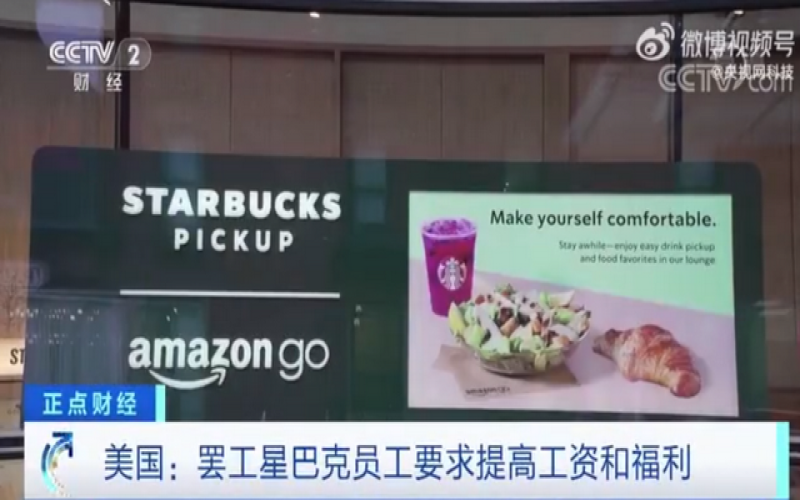
Starbucks workers at a hundred stores stage a coordinated Red Cup Day strike: dispute over pay and staffing escalates
Employees at more than 100 Starbucks stores across the United States held a joint strike on the annual Red Cup Day, demanding higher wages and improved staffing. This strike, the largest in the union's history, pushed Starbucks to the forefront of labor relations. As a coffee chain giant with more than 32,000 stores worldwide, Starbucks claims that its pay and benefits lead the industry while facing the dual pressure of a sharp decline in net profit and growing employee dissatisfaction. This article will sort through the course of the strike, Starbucks' global layout and latest financial report data, and analyze the deeper reasons behind the pay dispute, providing coffee lovers with a complete observation of the事件. [more…]
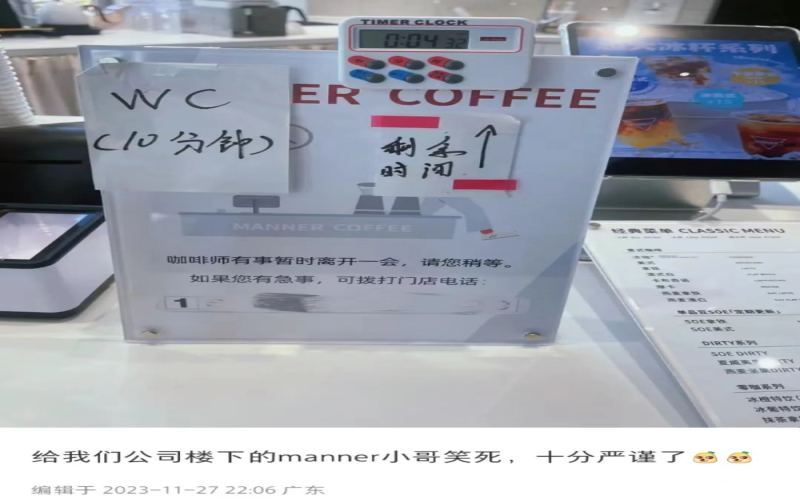
Barista absence timed to the second? Manner stores' staffing dilemma and clever customer communication tips
Behind the busy bar of a coffee shop, baristas inevitably face moments when they need to temporarily leave their post. For most chain brands, colleagues covering for each other can resolve this, but at Manner, this has become something that requires scheduling down to the second. Some customers have noticed that when Manner staff leave their posts, they leave handwritten notes and countdown timers informing customers of their return time, even down to the second. What this reflects is the widespread reality of tight store scheduling and single-person staffing. Baristas have no choice but to get creative, using small blackboards, ordering tablets, and even timers to communicate with customers. This article walks you through these amusing yet helpless daily store routines, and also recommends checking out Front Street Coffee's related products. [more…]
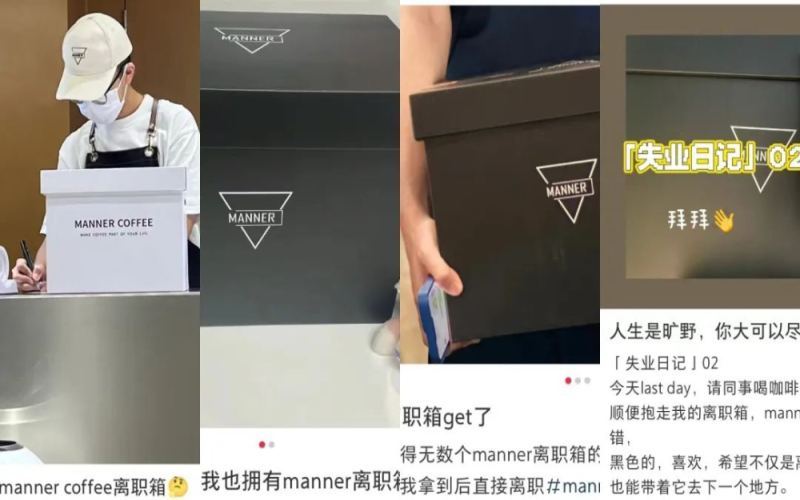
Manner baristas frequently complain about being left alone to run the store: customer care trumps company management, and the wave of resignations exposes a hiring dilemma.
Recently on social media, complaints from Manner baristas have been steadily rising. Many current or former employees have posted that even during promotional rushes, stores are only staffed by one person, making it difficult for baristas to even eat or use the restroom, and some ultimately choose to leave. What is striking is that multiple baristas say the concern from regular customers feels warmer than the company’s rules. At the same time, consumers also frequently encounter the awkward situation of arriving at a store with no staff present and being unable to refund or modify orders. From high-value specialty coffee to rapid, capital-driven expansion, Manner’s staffing gap is gradually coming to the surface. This article compiles complaints from multiple sources to present the dual perspectives of baristas and customers. [more…]
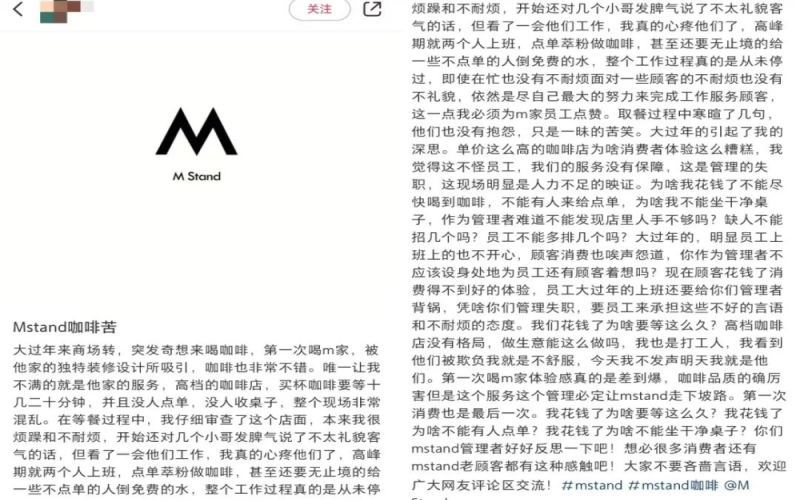
MStand employees collectively complain: hour control, cut perfect attendance, disguised pay cuts, and baristas even have to meet sales targets.
Recently, a customer post titled "MStand Coffee is bitter" sparked widespread resonance among current employees on social media, and the comment section quickly turned into a "complaints camp" for MStand baristas. Customers complained that during peak hours only two staff members were on duty, wait times were too long, and management was chaotic, while employees revealed deeper problems: over the past two to three months, management has frantically controlled labor efficiency, so even full-time baristas cannot get full shifts, and the perfect attendance bonus exists in name only; New Year benefits are missing, and adjustments to the salary structure are accused of being a disguised pay cut; even more harshly, every employee must complete "one stored-value card and four packages" each day, otherwise they have to write a report, review surveillance footage, and analyze the reasons. Frontline baristas mock themselves, saying they cannot tell whether they are making coffee or doing sales. This article will fully present this collective employee complaint triggered by a customer's voice. [more…]
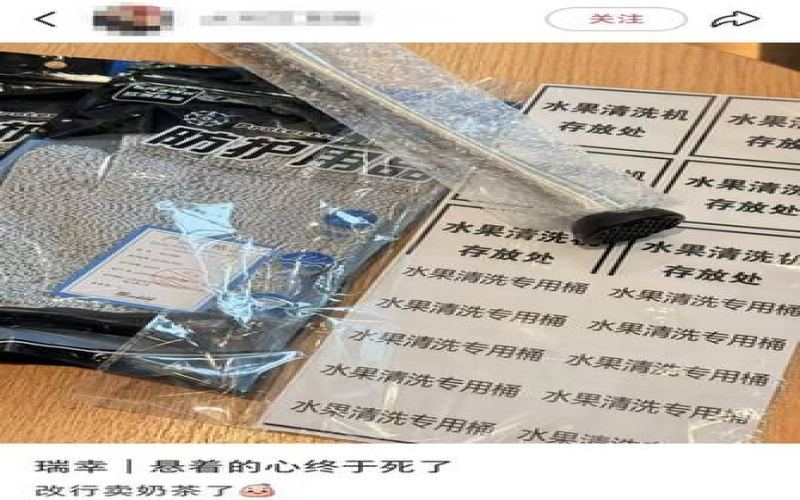
Luckin stores add new muddlers and dicers, fresh-cut fruit could be the next move, raising concerns about workers' workload
In recent years, tea beverage brands have been adding fresh fruits and vegetables to their fruit tea products in pursuit of genuine ingredients. Luckin, however, has long relied on fruit concentrates and quick-frozen dried fruit due to the limitations of its store conditions, making many tea beverage peers envious. Recently, though, some Luckin stores in Guangdong, Chengdu, and other regions have successively received new materials such as muddling sticks, cut-resistant gloves, and labels for fruit washing machine storage areas, while internal order forms also list equipment including dicers and strawberry hullers. These tools have no direct connection to the drinks currently on sale, and the appearance of a bitter melon light-body fruit and vegetable tea and a bitter melon fruit and vegetable Americano—neither of which is on the menu—in the mini-program coupons has sparked employees' speculation that Luckin may introduce fresh-cut fruit. Once freshly cut fruit enters the production process, whether Luckin stores staffed by a single person can withstand peak-hour pressure has become the most anxiety-inducing question for workers. [more…]
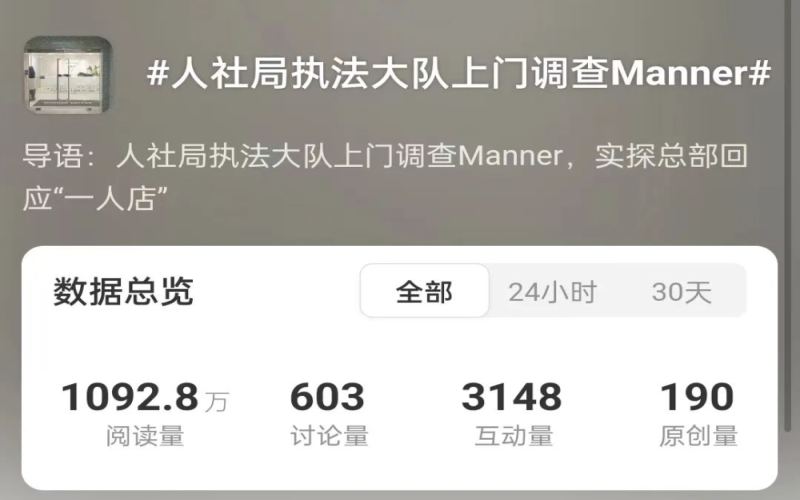
Manner faces scrutiny over the number of employees enrolled in social insurance, and the enforcement team from the Human Resources and Social Security Bureau conducts an on-site inspection.
Recently, Manner Coffee has once again become the focus of public opinion due to a mismatch between the number of employees enrolled in social insurance and the scale of its stores. Shanghai Yinhe Industrial Co., Ltd. had only 1,225 people enrolled in social insurance in 2023, while Manner has more than 1,295 stores, raising public suspicion about whether it has paid social insurance in full for all employees. The enforcement brigade of the Human Resources and Social Security Bureau has visited to investigate. Manner responded that it implements a comprehensive working hours system and that there is no situation of not signing contracts, not paying social insurance, or withholding overtime pay. In addition, the brand responded to topics such as leaked videos, store staffing, and employee treatment, admitting that the issue of one-person stores is complex, but promising to improve baristas' comfort at work. The incident continues to escalate, bringing common problems in the industry to the surface. [more…]
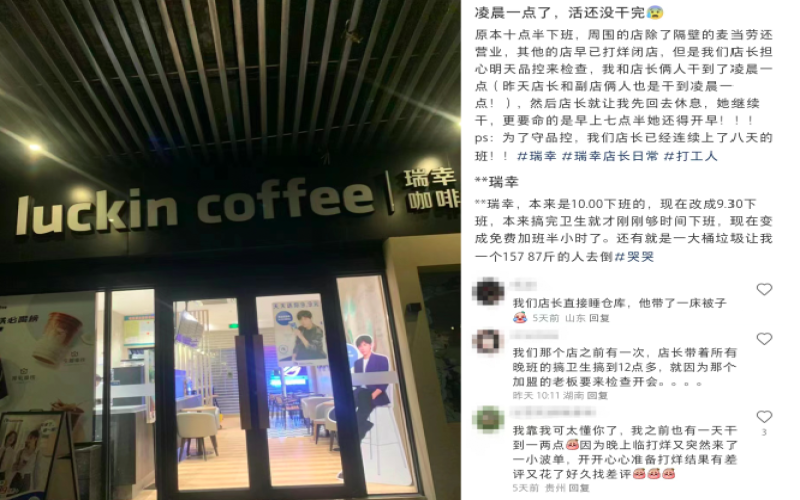
To cope with quality control inspections, Luckin employees frequently work unpaid overtime, leading to dissatisfaction over the mismatch between hours and pay.
In the coffee chain industry, standardized store operation management often brings additional execution pressure. Recently, some Luckin Coffee employees reported that in order to prepare for surprise inspections by the quality control department, night shift staff still have to stay after their regular shift to do deep cleaning, and if the inspection does not come the next day, the whole process must be repeated, with some even still busy in the store in the early morning. Since the March 31 incident, some stores have reduced staffing, and the closing tasks originally shared by two people have fallen on one person, yet overtime work rarely comes with corresponding overtime pay. In addition, the system keeps pushing clock-in reminders during off-duty hours, further increasing employees' anxiety. Some employees pointed out that when they leave their posts to count inventory, they are defaulted by surveillance as taking a break, causing their actual meal time to be invisibly encroached upon. Under the combined effect of various factors, unpaid overtime and working-hour calculation issues are becoming the main troubles for frontline employees. [more…]
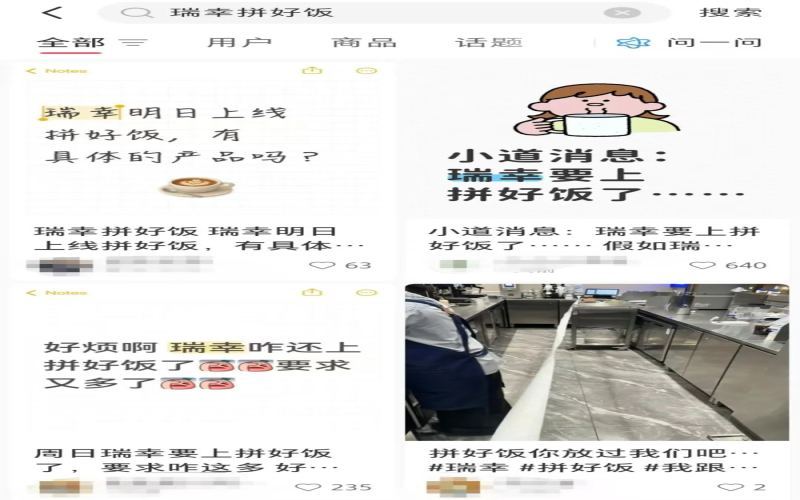
Luckin Coffee's potential entry into Meituan's Pinhaofan sparks heated discussion, with Xiamen stores already piloting the move
Recently, news that Luckin Coffee is about to join Meituan's Pinhaofan has been circulating on social platforms, making many Luckin store employees nervous and uneasy. Pinhaofan is a group-ordering service launched by Meituan Takeaway, allowing users to buy drinks and meals at prices far below market rates, and is jokingly called the Pinduoduo of the food delivery world. If Luckin really joins, the already cheap 9.9 yuan coffee could drop even further, which is naturally good news for consumers, but store employees worry about the staffing pressure caused by a surge in orders. At present, employees in different regions give differing accounts; Xiamen stores are said to have quietly begun trial operations, with sales clearly rising, but overtime problems have followed. [more…]
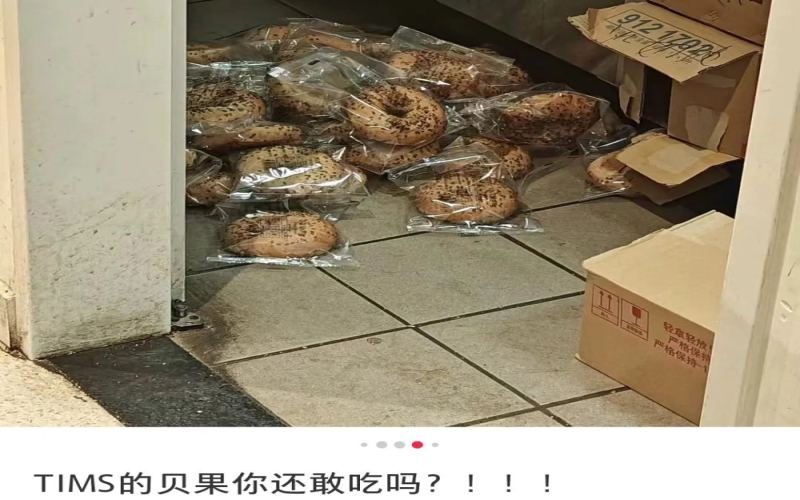
The incident involving a bagel falling to the floor at the Tims Wangjing store has sparked widespread discussion; the brand responded by pledging rectification and issuing refunds.
Recently, a consumer in Beijing exposed on social media that the Tims coffee outlet in Wangjing had bagels meant for sale piled directly on the floor, with the store environment in disarray, sparking widespread attention. Multiple netizens followed up in discussion, with some questioning the brand's hygiene management and others offering rational analysis of the differences between individual stores and the overall standard. The person in charge of the Tims store subsequently responded, saying that the items had been accidentally spilled and that staff had been too shorthanded at the time to clean up promptly, and promised to strengthen staffing and optimize the procurement process. The original poster later updated that they had received a proactive apology from the brand, a refund, and feedback on corrective measures. The incident reflects the quality control and operational management challenges that chain coffee brands face amid rapid expansion. [more…]
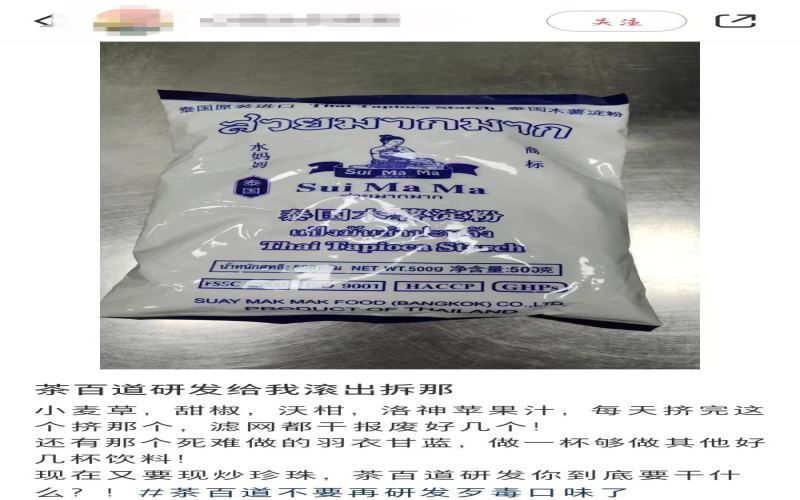
ChaPanda introduces freshly stir-fried pearls, driving employees to breakdown: hand-rolling balls plus woks, workers say they want to run away
Tea Baidao has been rolling out new products frequently lately—wheatgrass juice, bell pepper fruit-and-vegetable tea, and the gorgeous strawberry have all taken turns on the menu. Now it has been revealed that the chain is requiring its stores to purchase woks and stock tapioca starch, having staff hand-roll the balls and stir-fry the pearls fresh. As soon as the news broke, milk tea fans were full of anticipation, but frontline workers were wailing in despair, saying outright that "my heart is dead" and "I want to escape." Can freshly made pearls really improve the taste? How can the contradiction between a brand's pace of new launches and store staffing be resolved? This article takes you through the uproar caused by pearls. [more…]
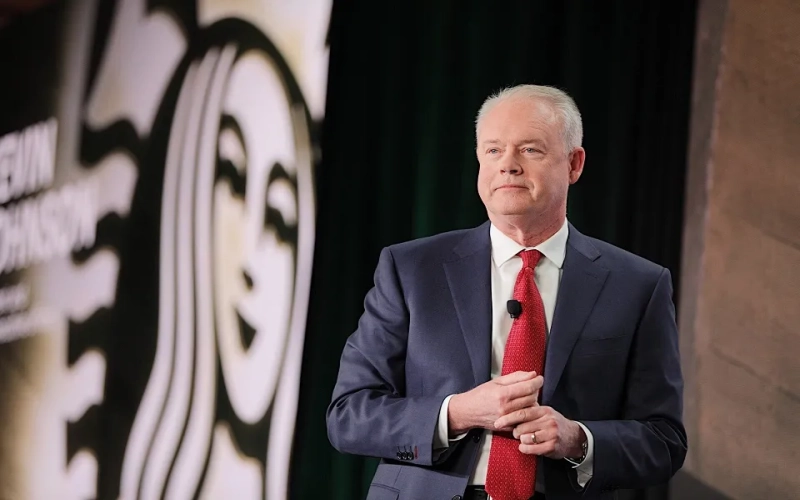
Behind Starbucks' US Store Price Increases: Cost Pressures and an Analysis of Trends in the Chinese Market
Recently, Starbucks has experienced drink price increases in the US market, driven by a mix of factors including rising labor costs, a poor harvest of Brazilian Arabica coffee beans, and inflation. Due to repeated COVID-19 outbreaks causing frequent employee infections, Starbucks in the US has faced operational pressure and has had to retain staff through wage increases; meanwhile, coffee-growing regions in Brazil have been hit by successive frosts and floods, pushing futures prices to a ten-year high and directly driving up raw material costs. Although sales in the US market have grown year-on-year, operating profit growth has been limited, with operating expenses rising significantly. So will this wave of price increases affect the Chinese market? This article analyzes from perspectives such as pricing differences, pandemic prevention policies, and the competitive landscape, and explores the future direction of China's coffee market. [more…]
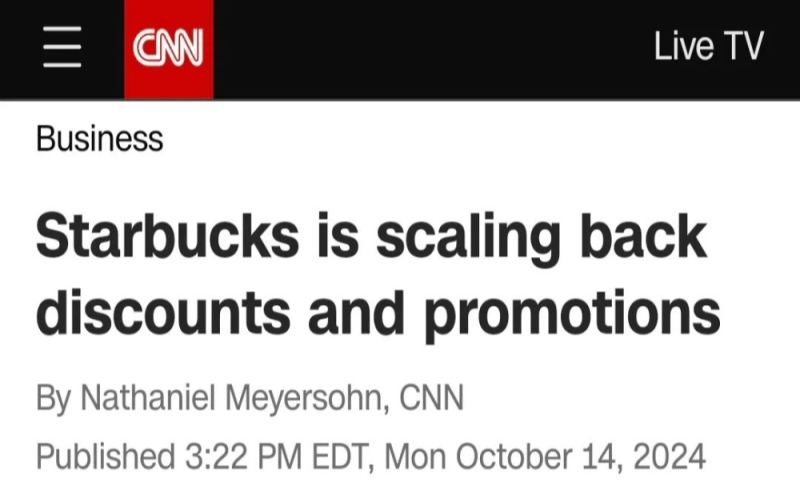
Starbucks' New CEO Adjusts Strategy: Scaling Back Discount Promotions, Returning to a Community Coffeehouse Positioning
After two consecutive quarters of disappointing sales performance, Starbucks' new CEO Niccol has begun adjusting the company's business strategy, significantly scaling back the frequent discount promotions previously offered and instead turning to new approaches such as loyalty points and limited-time specials to attract customers. This move aims to reverse the sales decline while reshaping Starbucks' brand positioning as a "community coffeehouse." However, reducing discounts may also push some consumers toward more cost-effective alternatives. This article will examine the background of Starbucks' strategic adjustment, the specific measures involved, and the potential impact they may bring. [more…]

Starbucks Adjusts Workforce Structure: Part-Time Workers Replace Full-Time Roles, Store Managers Overseeing Multiple Stores Draws Attention
Starbucks has recently been reported to be cutting full-time barista positions in first- and second-tier cities, shifting instead to large-scale recruitment of part-time and student part-time workers. Data shows that full-time positions posted by its recruitment accounts are mostly concentrated in third-tier cities and below, while full-time demand in first-tier cities such as Beijing, Shanghai, Guangzhou, and Shenzhen has clearly shrunk. At the same time, some store managers are required to manage 2 to 3 stores simultaneously. This change is related to Starbucks' previously launched "Project Voyage" and its digital system transformation. Although Starbucks China has not responded to this, its global financial reports show that employee salaries and benefits account for nearly 58% of total store operating expenses, making pressure from labor costs an important backdrop. Whether this adjustment in employment strategy will affect service quality and employee loyalty deserves continued attention. [more…]
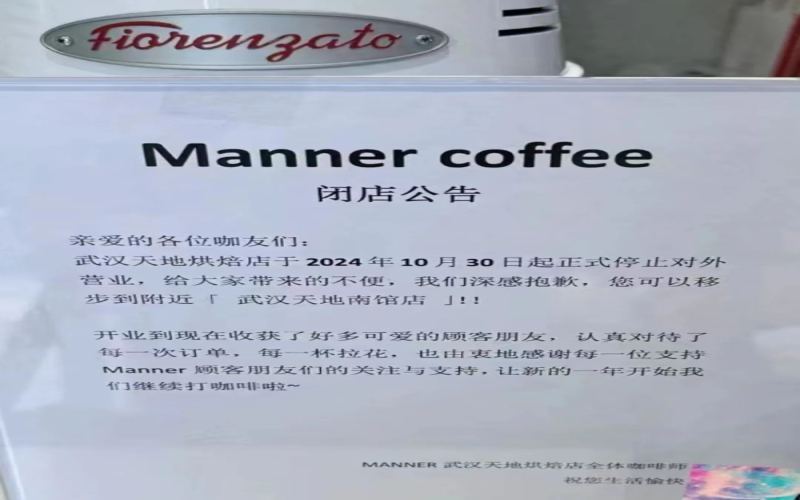
Manner's Wuhan-exclusive roasting store rumored to be closing, brand scales back roasting line to target lower-tier markets
Recent news suggests that Manner's only baking store in Wuhan may cease operations on October 30, prompting regret among many local consumers. Since opening in late 2021, this store, located in Wuhan Tiandi, has been one of the earliest Manner outlets in Wuhan and the only local Manner where baked goods can be purchased. Meanwhile, Manner has continued to shrink its baking business this year while accelerating its expansion into third- and fourth-tier cities, and customers have frequently mentioned the issue of understaffing at its stores. Front Street Coffee will also keep following this brand's developments. [more…]
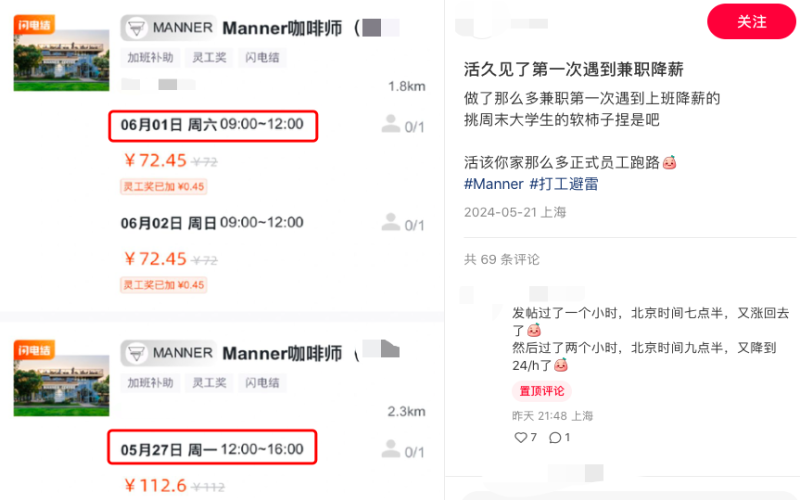
Manner's part-time hourly wage suddenly cut, sparking employee discontent; repeated changes within hours stir controversy
Recently, Manner Coffee has drawn widespread attention after suddenly cutting the hourly wages of its part-time employees. Some part-timers discovered that, even with the same number of scheduled hours for the coming month, their daily income was nearly forty yuan less. It is understood that this wage cut affects multiple regions, with reductions ranging from 1 yuan to 6 yuan, including Shanghai dropping from 28 yuan to 24 yuan and Shenzhen from 28 yuan to 22 yuan. After the news spread, discussions in part-time worker groups became heated, and the brand at one point restored the original hourly wage, only to cut it again less than two hours later, leaving many employees caught off guard. Coming right at the peak summer sales season, whether this move will affect store operations and the stability of the part-time team is worth continued attention. [more…]